This guide is for small and mid-sized e-commerce brands and startups that are ready to build a communication strategy that drives brand awareness, trust, and conversions. Below is a three-step process to help you align your product with your audience and communicate your Unique Selling Proposition (USP) clearly across your website, social media, and advertising.
Step 1: The Foundation — Deep Target Audience Analysis
Before you write any copy or design new marketing assets, you must understand exactly who you’re speaking to. Your product is the solution — but you need clarity on the person experiencing the problem.
Target Audience Analysis: Beyond Demographics
A simple demographic summary is not enough. You must explore the psychographic and behavioral factors that influence how and why your audience buys.
Demographic Factors
These include age, gender, location, income level, and education. They provide the foundation for making decisions about pricing, channels, and brand positioning.
Psychographic Factors
These include interests, values, lifestyle choices, and personal preferences. They help uncover the emotional reasons behind buying decisions and guide you in creating messaging that resonates on a deeper level.
Behavioral Factors
These include shopping habits, preferred communication channels, media consumption, and brand loyalty. Understanding these behaviors helps determine where you should advertise, how often you should communicate, and what tone to use.
Pain Points and Challenges
Identify the frustrations, obstacles, and problems your audience wants to solve. These pain points are central to your value proposition.
Decision-Making Process
Understand what influences their purchase decisions: price, quality, social proof, convenience, or recommendations. This insight helps you shape your website structure, navigation, and marketing funnel.
The Avatar Profile: 10 Things You Must Document
To make your analysis actionable, create a detailed customer avatar. This document should include:
- Their “Before State”: What their life or situation looks like before using your product — including frustrations and inefficiencies.
- Their “Dream Outcome”: The transformation they want. This is the highest-level benefit your product delivers.
- Top Five Buying Decisions: The criteria they use to evaluate options in your category.
- Stage of Awareness: Whether they are problem-aware, solution-aware, or product-aware.
- What They’ve Tried Before: What has failed and why your product is the better option.
- Top Five Pain Points: The recurring frustrations your product solves.
- Top Five Goals: The aspirations they hope to fulfill.
- Top Five Common Questions in the Niche: These shape your content marketing topics.
- Top Five Roadblocks and Objections: The reasons they hesitate and how you can proactively address them.
- Key Stats, Facts, and Figures: Data that supports the need for your product or validates your category.
When completed thoroughly, this profile defines the exact audience for your ads, website messaging, and marketing campaigns.
Step 2: The Alignment — Matching Benefits to Customer Needs
Once you clearly understand your customer, the next step is to connect your product’s features with your audience’s needs and desires.
Features vs. Benefits: The Golden Rule
A feature is what your product has.
A benefit is what your customer gets.
Customers buy benefits, not features.
Example 1: Waterproof Jacket
- Feature: A triple-layer waterproof membrane.
- Benefit: The customer stays completely dry and comfortable during rain.
- Need/Pain Addressed: Protection from the elements; avoiding discomfort during outdoor activities.
Example 2: Simplified Checkout
- Feature: A single-page checkout process.
- Benefit: The purchase can be completed in under 30 seconds with no frustration.
- Need/Pain Addressed: Convenience; eliminating long or confusing checkout flows that lead to cart abandonment.
Example 3: Single-Origin Coffee
- Feature: Beans sourced directly from a single-origin farm in Colombia.
- Benefit: Customers enjoy a premium, ethically produced cup of coffee while supporting fair wages.
- Need/Pain Addressed: Ethical consumption and desire for higher-quality products.
Action Step:
Create a list of all product features, convert each one into a customer benefit, and then match each benefit to a corresponding pain point or goal from your customer avatar.
Step 3: Communication Strategy — Using Your USP to Drive Conversions
Your Unique Selling Proposition (USP) is the most compelling reason someone should buy from you rather than a competitor. Once your USP is defined, it should be integrated consistently across all customer touchpoints.
A. Your E-commerce Website
Your website functions as a 24/7 salesperson. Your USP and core benefits should be prominently displayed.
Homepage Hero Section
Feature your main USP and most important value proposition. This should be the first message customers see.
Product Pages
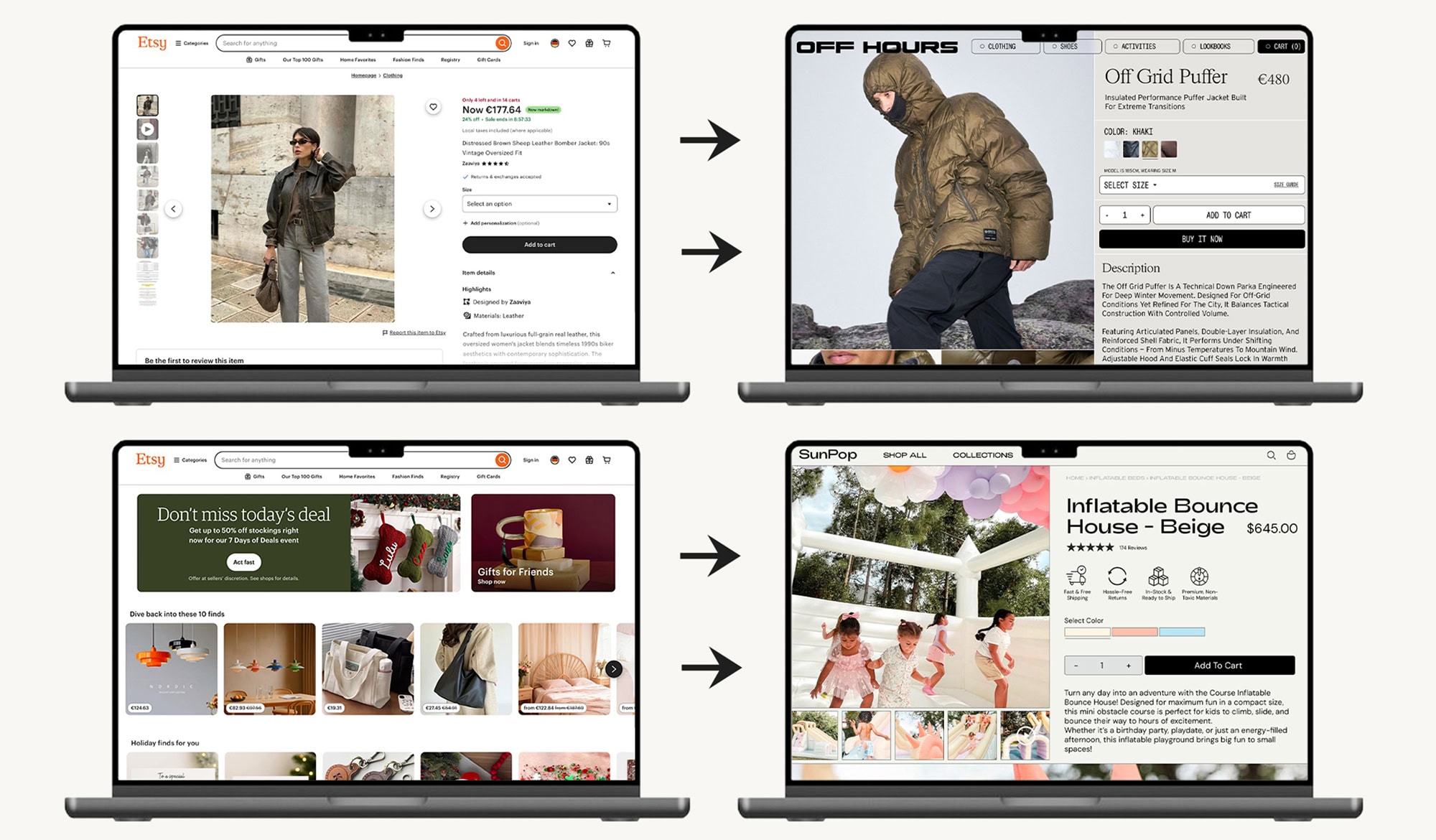
Translate product features into benefits and address specific objections gathered from your audience research. Instead of simply listing materials or specs, explain what they mean to the customer.
Navigation and Footer
Include supporting USPs, trust elements, guarantees, shipping highlights, certifications, and other reassurance-driven content.
About Us Page
Tell your story and communicate your brand values. Speak directly to the goals and values of your target audience (e.g., sustainability, craftsmanship, community).
Checkout Process
Use reassurance messaging such as “Secure Payment,” “Easy Returns,” or reminders of the customer’s dream outcome.
B. Social Media and Advertising
Social media and ads must capture attention and address your customer’s emotional triggers.
1. Lead With a Pain Point
Use the customer’s frustration as the opening hook.
Example: “Tired of protein powders that taste chalky?”
2. Introduce the Benefit
Present your product as the superior solution.
Example: “Meet the all-natural protein that blends smoothly and tastes great.”
3. Use Visuals That Show the Transformation
Your creative should depict the “after state” — the life your product helps the customer achieve.
4. Segment Your Ads
Tailor messaging based on audience segments identified during your analysis. Different groups will respond to different benefits.
C. Building Trust and Authority
Long-term brand success comes from establishing credibility and continually delivering on promises.
Use Social Proof
Customer testimonials should speak to the specific benefits delivered.
Be Transparent
Open communication about sourcing, processes, and standards builds trust.
Educate Your Audience
Use blogs, videos, and social posts to answer commonly searched questions in your niche, positioning your brand as an expert resource.
Conclusion: Your Roadmap to E-commerce Success
Successful e-commerce brands don’t just sell products — they sell transformation.
By completing these three steps:
- Deep customer analysis
- Translating features into meaningful benefits
- Communicating your USP effectively
—you set your brand up for:
- Greater brand awareness
- Higher trust and authority
- Increased conversions
When you master your audience’s motivations, translate features into meaningful benefits, and communicate a clear, compelling USP, every part of your brand becomes more powerful. Your messaging becomes sharper, your ads become more effective, and your website becomes a frictionless path toward purchase.
Most importantly, your customers immediately understand why your product matters in their lives — and that clarity is what fuels sustainable growth, repeat sales, and lasting brand loyalty.



.jpg)